

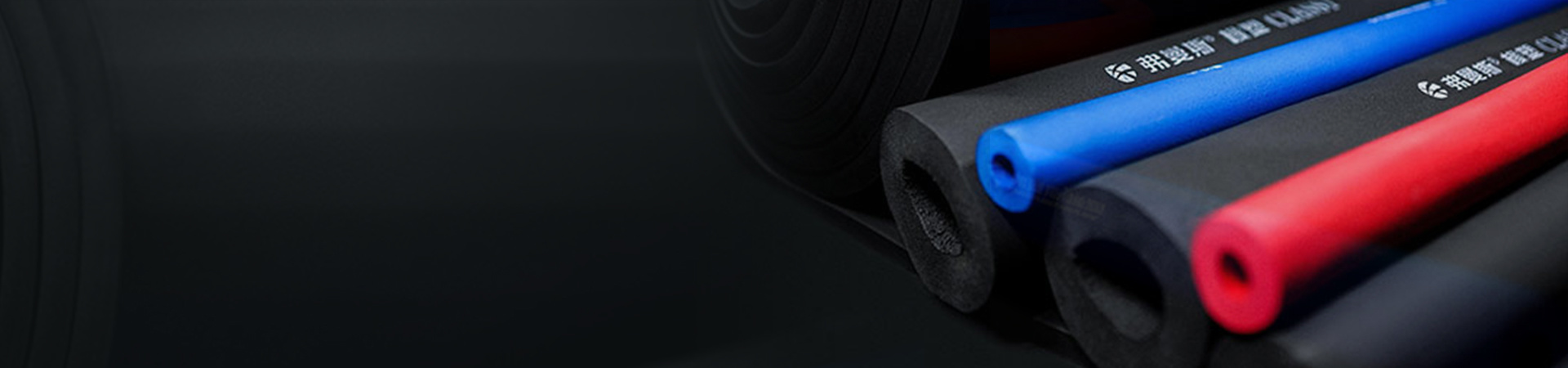
The working principle of copper pipe insulation: preventing heat from escaping.
Release time:2025-11-20
Introduction
In modern architecture and industrial equipment, thermal management is of paramount importance. And copper pipe insulation is a crucial tool for achieving effective thermal management. Speaking of copper pipe insulation, you might be wondering: How exactly does it work? Let’s find out today!
What is copper pipe insulation?
Simply put, copper pipe insulation involves wrapping a layer of insulating material around the exterior of copper pipes to reduce heat loss or prevent external heat from entering. Copper itself is an excellent conductor of heat; however, without insulation, heat would quickly dissipate, leading to energy waste. By insulating copper pipes, we can effectively maintain the temperature inside the pipes and ensure the smooth operation of equipment.
The working principle of copper pipe insulation
The working principle of copper pipe insulation primarily relies on the control of three heat transfer mechanisms: conduction, convection, and radiation. The selection of insulation material is crucial; the lower its thermal conductivity, the better its insulation performance will be. Commonly used insulation materials include polyurethane and rock wool.
Thermal conduction
Heat conduction refers to the transfer of heat through collisions between microscopic particles within a material. In copper pipe insulation, the presence of an insulating layer significantly slows down the rate at which heat is conducted outward. As a result, heat inside the pipe is better retained, reducing energy loss.
Convection
Convection is the process by which heat is transferred through a fluid medium—such as air or liquid. Insulating copper pipes effectively restricts airflow near the pipe’s surface, thereby reducing heat loss. Imagine this: without insulation, cold air would come into direct contact with the pipe, and heat would naturally be carried away.
Radiation
Radiation is a method of heat transfer via electromagnetic waves. Although, in copper pipe insulation, the effect of radiation is relatively minor, high-quality insulation materials can still reflect some heat to a certain extent, further enhancing the insulation performance.
Application scenarios for copper pipe insulation
Copper pipe insulation is widely used—in both residential heating and cooling systems as well as industrial pipelines. For example, condensate pipes in air conditioners, hot-water pipes, and various fluid-conveying systems are all ideal applications for copper pipe insulation. With effective insulation, energy efficiency can be improved while operating costs are reduced.
Advantages of copper pipe insulation
Copper pipe insulation not only prevents heat loss but also extends the service life of the pipes. This is because both excessively high and excessively low temperatures can damage pipes, whereas insulation measures effectively maintain temperature stability. In addition, copper pipe insulation has an anti-condensation effect, reducing corrosion caused by moisture condensation.
Conclusion
In summary, the working principle of copper pipe insulation lies in controlling heat conduction, convection, and radiation. In modern society, paying attention to copper pipe insulation is not only a necessity for energy conservation and emission reduction but also an important measure for enhancing equipment efficiency. We hope that through this article, everyone can gain a deeper understanding of the working principles of copper pipe insulation and thus make better use of this technology in practical applications!
Copper pipe insulation
Related News
Contact Information
Service hotline:
+86 713-520 2222
Address: Ecological Science Park, Yongjiahe Town, Hong'an County, Huanggang City, Hubei Province
Focus on us
