

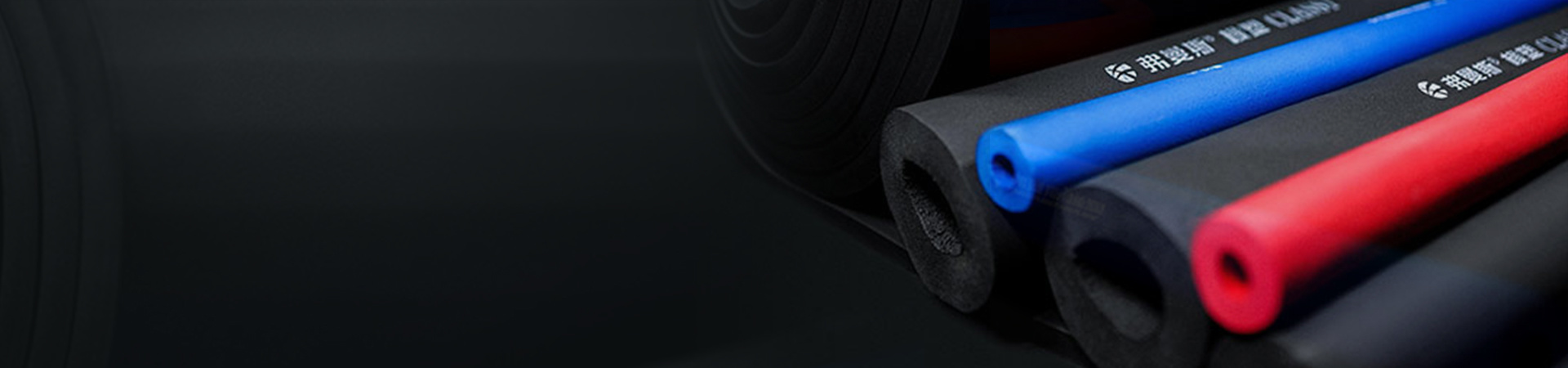
Unveiling the Working Principle and Applications of Rubber-Plastic Insulation Pipes
Release time:2025-11-17
Rubber-plastic insulation pipe: What the heck is that?
In the fields of modern architecture and industry, Rubber-plastic thermal insulation pipe It can truly be called a “star” product. Not only does it effectively prevent heat loss, but it also boosts energy efficiency. But just how does it work? Let’s unravel its mysteries together!
The basic structure of rubber and plastic thermal insulation pipes
To understand Rubber-plastic thermal insulation pipe To understand how it works, we first need to grasp its structure. Generally speaking, this type of pipe is made from highly elastic rubber and polyurethane materials, forming a closed-cell structure. This structure effectively insulates against external temperatures and prevents heat conduction.
The three modes of heat transfer
In discussion Rubber-plastic thermal insulation pipe When discussing how it works, we must mention heat transfer. Heat is primarily transferred through three mechanisms: conduction, convection, and radiation. Thanks to its unique material structure, the rubber-plastic insulation pipe significantly reduces thermal conductivity.
1. Thermal conductivity
Thermal conduction is the process by which heat is transferred through direct contact between materials. The material used in rubber and plastic insulation pipes has a low thermal conductivity, meaning that heat does not easily pass through the pipe walls, thereby maintaining a stable internal temperature.
2. Convection
Convection is the process by which heat is transferred through a fluid—such as air or water—both inside and outside a pipe. Because the outer layer of the rubber-plastic insulation pipe effectively blocks airflow, it reduces heat loss caused by convection.
3. Radiation
*Finally, radiation is the transfer of heat in the form of electromagnetic waves. The surface of the rubber-plastic insulation pipe has undergone special treatment, enabling it to effectively reflect heat and further reduce radiative heat loss.
Advantages of rubber and plastic insulation pipes
Speaking of this, you might ask: What exactly are the advantages of this thing? Here are several noteworthy benefits:
- Moisture and mold resistance: Its material properties enable it to withstand humid environments and prevent mold growth.
- Lightweight and easy to install: Compared to traditional insulation materials, rubber-plastic insulation pipes are not only lightweight but also easy to install, significantly reducing labor costs.
- Cost-effective: Long-term use can effectively reduce energy consumption and save considerable expenses.
Application fields
Rubber-plastic thermal insulation pipe Its application scope is extremely broad, including but not limited to:
- Building sector: Used in HVAC systems to prevent heat loss.
- Industrial sector: In industries such as chemical engineering and pharmaceuticals, ensuring stable pipeline temperatures.
- Solar energy system: Enhancing the efficiency of solar water heaters.
Summary
In summary, Rubber-plastic thermal insulation pipe Its working principle lies in effectively isolating heat transfer, enabling it to deliver outstanding performance across a wide range of fields. Whether in architectural or industrial applications, it brings convenience and energy savings to our daily lives. What are you waiting for? Come and try out this “thermal insulation wizard” now!
Rubber-plastic thermal insulation pipe
Related News
Contact Information
Service hotline:
+86 713-520 2222
Address: Ecological Science Park, Yongjiahe Town, Hong'an County, Huanggang City, Hubei Province
Focus on us
