

What kind of material is rubber-plastic insulation board?
Release time:2022-03-15
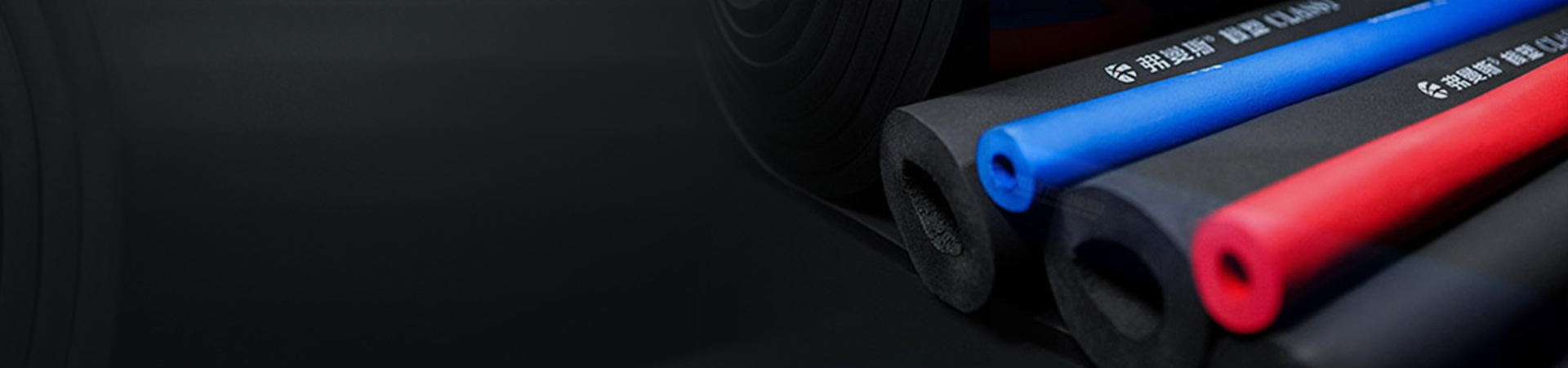
The Class B1 black flame-retardant self-adhesive rubber-plastic insulation board is a fire-resistant and flame-retardant material. It is made primarily from nitrile rubber. It is produced by supplementing other materials through a complex processing procedure. What kind of material is this? This article will introduce it to you, dear editor.
The Class B1 black flame-retardant self-adhesive rubber-plastic insulation board is made from JQ rubber, specially processed and compounded with other materials, and then subjected to high-temperature foaming to form a closed-cell flexible foam material. The performance of the rubber-plastic insulation board: Black is the most commonly used color for rubber-plastic insulation boards. Although other colors such as blue, green, and red are available, black remains the most widely adopted hue—this is because black offers superior insulation performance compared to other colors. This material is classified as Class B1 due to its safety and fire resistance characteristics, which fall under the B1 rating—that is, it meets fire-resistant and flame-retardant standards. For conventional rubber-plastic insulation boards, if you wish to purchase them, you typically need to buy matching insulation adhesive separately and apply it together to ensure firm adhesion to the equipment surface. However, this installation process can be somewhat cumbersome, so you’ll need to pre-apply the adhesive beforehand. To address this issue, there’s a self-adhesive rubber-plastic insulation board available. One side of this insulation board features a self-adhesive property. When using it, you simply peel off the kraft paper covering the self-adhesive surface and stick it directly onto the equipment’s surface—making the application process remarkably convenient. The performance of the rubber-plastic insulation board.

What are the characteristics of Class B1 black flame-retardant self-adhesive elastomeric insulation boards? First, they have low thermal conductivity and excellent insulation performance. Just like those used in air conditioners and outdoor water pipes, these boards are also employed for roof insulation in sheds due to their superior thermal insulation properties. Second, they offer soundproofing and vibration damping. As we know, this material is both flexible and elastic, giving it effective vibration-damping capabilities. Moreover, its high-density structure—with its closed-cell configuration—can block out most noise, thus providing excellent sound insulation. Its soundproofing benefits are utilized in applications such as floor partitions in buildings and wall partitions in upscale clubs. Third, they are waterproof and moisture-resistant. The internal structure of this material consists of numerous tiny, closed cells that are completely independent of each other, effectively preventing the ingress of water vapor and allowing water to simply run off the surface without penetrating the material. Fourth, they are fire-resistant and flame-retardant. During the manufacturing process, an appropriate amount of flame retardant is added, endowing the material with safe fire-resistant and flame-retardant properties, enabling it to self-extinguish once ignited.
Related News
Contact Information
Service hotline:
+86 713-520 2222
Address: Ecological Science Park, Yongjiahe Town, Hong'an County, Huanggang City, Hubei Province
Focus on us
