

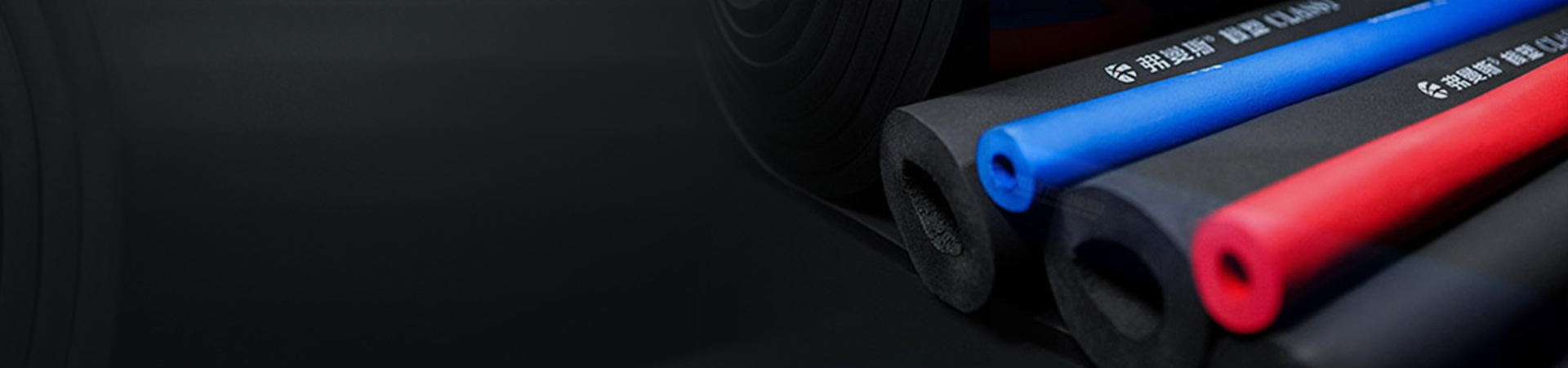
Product performance of rubber and plastic insulation materials
Release time:2020-05-25
Product performance of rubber and plastic insulation materials
A: low thermal conductivity when the average temperature is 0 ℃, the thermal conductivity of this material is 0.034W/mk, and its surface heat release coefficient is high, so under the same external conditions, the thickness of this product is more than half of other thermal insulation materials can achieve the same thermal insulation effect, thus saving the space above the floor ceiling and saving investment.
Second: good flame retardant performance This material contains a large number of flame retardant smoke reduction raw materials, the smoke concentration generated during combustion is extremely low, and does not melt in case of fire, does not drop the fire ball, and the material has the characteristics of self-extinguishing. This product is B1 class flame retardant material, to ensure safe and reliable.
Three: closed-cell foam, moisture-proof performance is good 1, glass fiber: open structure of water vapor permeability is very high, resulting in with the use of time, the thermal conductivity also increased, so that the heat preservation effect is greatly reduced.
2, foamed polyethylene (PEF): even hole structure, has a high water vapor permeability, its material is hard and brittle, easy to break, short life.
3, rubber and plastic: closed-cell structure has a very small water vapor permeability, can maintain a low thermal conductivity for a long time.
Four: good seismic performance rubber insulation material has a high elasticity, which can minimize the chilled water and hot water pipeline in the use of vibration and resonance.
Five: flexible performance rubber and plastic materials have good winding and toughness, easy to deal with bending and irregular pipes in construction, and can save labor and material.
Six: easy installation, beautiful appearance because of this product rich soft, easy to install. Pipe installation: it can be installed together after being put on, or the pipe can be cut longitudinally and then glued together. For complex parts such as valves, tees, elbows, etc., the plates can be cut and bonded according to different shapes to ensure the tightness of the entire system, thereby ensuring the insulation of the entire system. And because the material has the appearance of rubber smooth flat, as well as its own excellent performance, no additional vapor barrier layer, protective layer, reducing the construction of the trouble, but also to ensure a beautiful appearance, smooth. When the equipment or pipeline is overhauled, the stripped material can be reused without changing its performance.
Seven: other advantages of rubber insulation material is very safe to use, neither irritate the skin, nor harm to health. They can prevent mold growth, avoid pests or mice bite, and acid and alkali resistance, superior performance. These properties make rubber and plastic an ideal thermal insulation material to protect pipelines and prevent them from being corroded by atmospheric media or industrial environments.

Rubber insulation material installation should pay attention to the following points:
1. All cuts and joints need to be bonded and sealed with special glue.
2. After installation, all tees, elbows, valves, flanges and other accessories must reach the design thickness.
3. Do not use too much force when bonding glue, and the interface between all materials should be bonded under slight extrusion.
4. When installing, the large pipe should be followed by the small pipe, the elbow, the tee, the straight pipe, and the valve and the flange.
5. When installing frozen water pipes and refrigeration equipment, the gaps between the two ends of the rubber and plastic pipes and the iron pipes need to be coated with glue and bonded, and the bonding width should not be equal to the thickness of the rubber and plastic materials.
7. Do not install the machine in use. Do not turn on the machine within 36 hours after installation.
8. Rubber and plastic pipes with large pipe diameter have become oval due to packaging. Please cut the flatter side when cutting open.
Factors to consider in determining the thickness of rubber and plastic insulation materials:
1. The higher the ambient temperature, the thicker the material; 2. The greater the relative humidity, the thicker the material; 3. The lower the medium temperature, the thicker the material; the larger the pipe diameter, the thicker the material.
Hubei Ovis Energy Saving Technology Company is a professional rubber and plastic board, rubber and plastic insulation board, rubber and plastic insulation board, color rubber and plastic board, rubber and plastic insulation pipe, rubber and plastic pipe and other rubber and plastic insulation manufacturers, rubber and plastic pipe and rubber and plastic board advanced technology, factory direct sales, reliable quality, reasonable price, welcome to inquire!
Previous Page
Related News
Contact Information
Service hotline:
+86 713-520 2222
Address: Ecological Science Park, Yongjiahe Town, Hong'an County, Huanggang City, Hubei Province
Focus on us
