

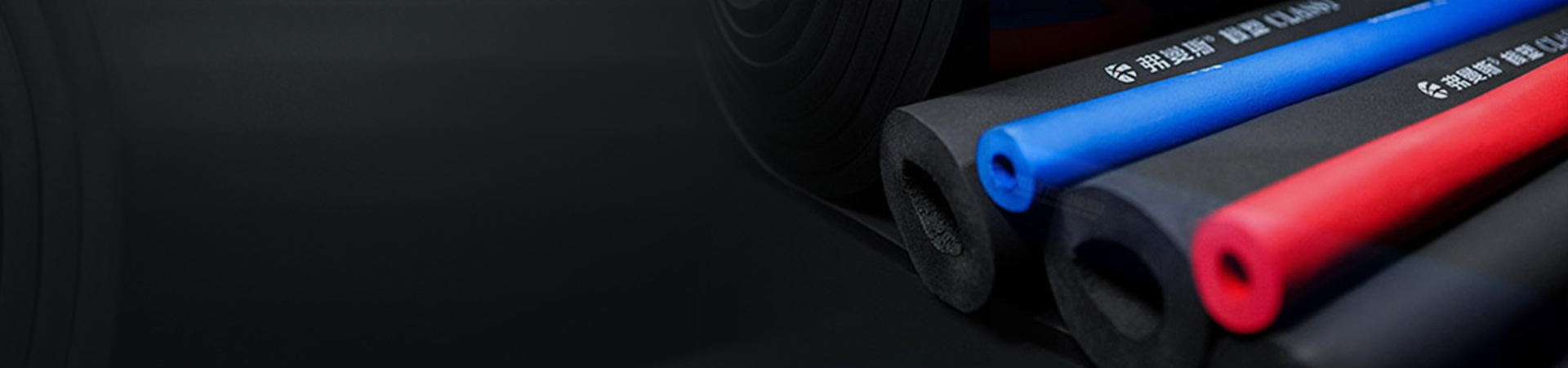
Performance Advantages and Application Fields of Rubber and Plastic Insulation Boards
Release time:2024-11-05
As an insulation material widely used in fields such as construction, industrial piping, refrigerated transportation, and air-conditioning systems, rubber-plastic insulation boards play a crucial role in energy conservation, emission reduction, and improving energy efficiency thanks to their unique material properties and outstanding thermal insulation performance. This article introduces the performance advantages, application areas, as well as related construction and maintenance knowledge of rubber-plastic insulation boards.
I. Performance Advantages
High-efficiency thermal insulation: The rubber-plastic insulation board employs advanced closed-cell technology, featuring a low thermal conductivity and excellent insulation performance. It effectively reduces energy transfer and heat loss, enhancing the building’s thermal insulation effect and lowering energy consumption.
Fire Safety: The rubber-plastic insulation board has undergone special flame-retardant treatment and boasts excellent fire-resistant performance. In the event of a fire, it can slow down the spread of flames, providing valuable time for evacuation and firefighting efforts.
Waterproof and Moisture-Resistant: The closed-cell structure gives the rubber-plastic insulation board excellent waterproof and moisture-resistant performance, effectively preventing moisture from penetrating walls or pipelines and extending the service life of buildings.
Soundproofing and Vibration Damping: The high-density foam structure effectively absorbs and isolates noise and vibrations, creating a quieter and more comfortable living environment for users.
Easy construction: The rubber-plastic insulation board has a soft texture, making it easy to cut and install, which can significantly shorten the construction period and reduce construction costs.
II. Application Fields
Building thermal insulation: Rubber-plastic insulation boards are widely used in thermal insulation projects for building exterior walls, roofs, doors and windows, helping to improve building energy efficiency and reduce energy consumption.
Industrial pipe insulation: On conveying pipelines in industries such as chemical engineering, petroleum, and pharmaceuticals, rubber-plastic insulation boards can effectively prevent heat loss and ensure stable process temperatures.
Refrigerated Transportation: In cold-chain logistics systems such as refrigerated trucks and cold storage facilities, rubber-plastic insulation boards ensure temperature control for goods like food and pharmaceuticals during transportation and storage, thereby reducing the risk of thawing and spoilage.
Air conditioning systems: Rubber-plastic insulation boards are widely used in ducts, water pipes, and terminal equipment of central air-conditioning systems, effectively preventing cold loss and improving the efficiency of air-conditioning systems.
III. Construction and Maintenance
The installation of rubber-plastic insulation boards is relatively simple, but the following points should be noted: Ensure safety at the construction site and keep the wall surface dry and clean; use adhesives according to the instructions provided; and make sure that fasteners are securely and stably installed. For maintenance, regularly clean the rubber-plastic insulation boards to remove dust, oil stains, and other contaminants, thereby extending their service life and enhancing their thermal insulation performance.
Rubber and plastic insulation board
Related News
Contact Information
Service hotline:
+86 713-520 2222
Address: Ecological Science Park, Yongjiahe Town, Hong'an County, Huanggang City, Hubei Province
Focus on us
